Why Is Your Toilet Running, and What It Is Costing You
by Hanna Carolina · 4 min read
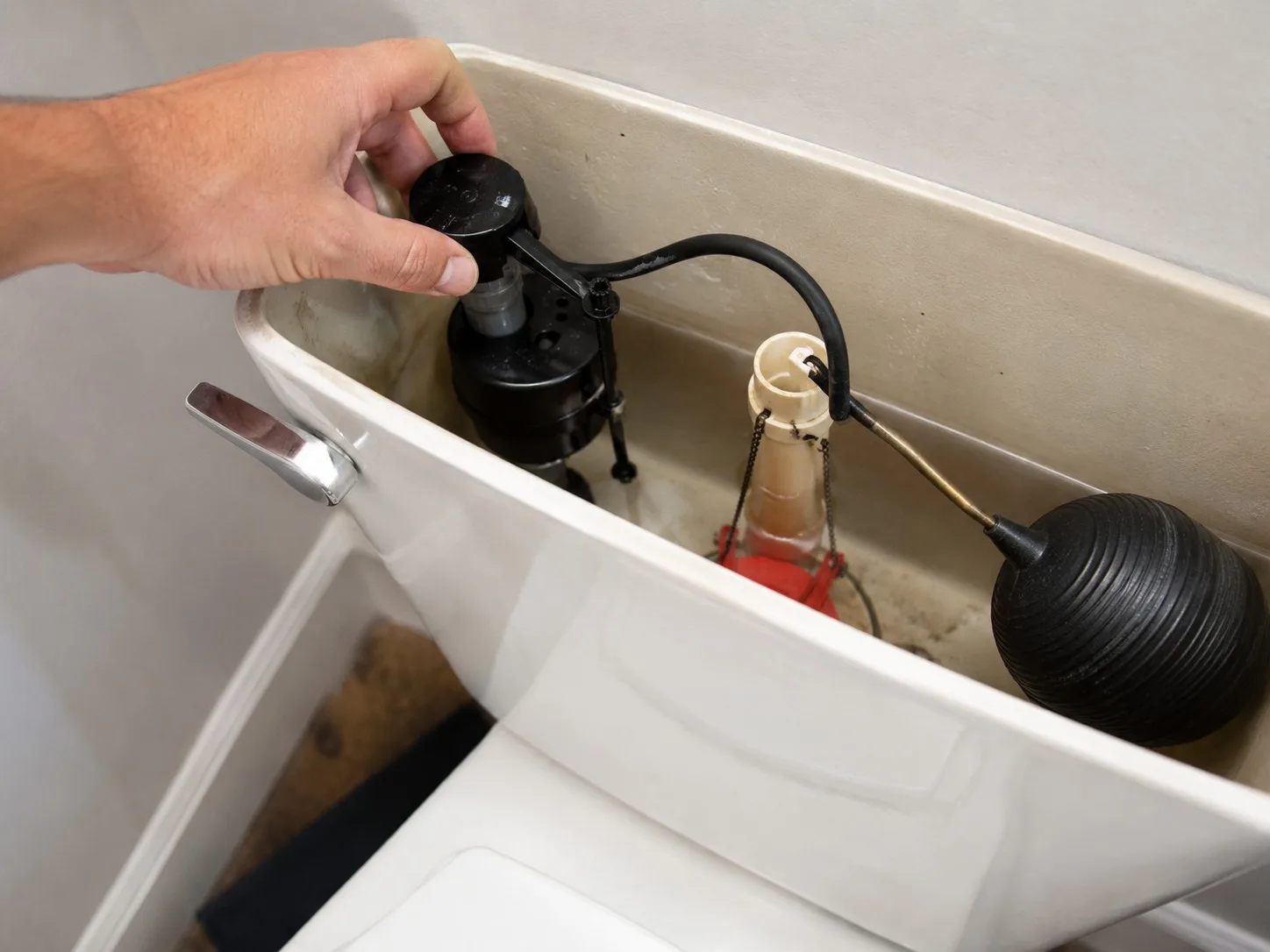
What makes a toilet keep running after you flush?
A running toilet is almost always a worn flapper or a fill valve that will not shut off, letting water slip from the tank into the bowl. If jiggling the handle stops it, the flapper or the chain is the culprit. If it keeps going, the tank parts need replacing. Either way it is a small job for a plumber. Call Herrell Plumbing at (407) 273-6260 or reach out to our team and we will sort it out.
Here is what is happening inside the tank. The flapper is the rubber seal at the bottom that lifts when you flush and drops back to hold water. Over time it warps or stiffens and stops sealing, so water trickles past it and the fill valve keeps topping the tank off to make up the loss. That trickle is the leak. Our hard Central Florida water speeds it along, leaving mineral scale on the flapper and the valve seat that keeps them from closing tight.
Sometimes the fix is even simpler and the float is just set too high, sending water over the overflow tube. Swapping the guts of a toilet is quick and inexpensive, and it stops the cycle for good.
Do drop in tank tablets and bowl deodorants damage your toilet?
Yes, more than most people expect, and we advise against both. Chlorine tablets that sit in the tank are the worse offender. The damage is slow but real. They eat the rubber and plastic parts inside, and that corrosion leads straight to leaks and a toilet that runs. What looks like a convenient way to keep things clean is quietly destroying the components you count on to hold water.
The deodorants that hang inside the bowl rim cause a different problem. They are prone to slip loose, and once one drops it can lodge in the trap or the drain and block the works entirely, and clearing that kind of obstruction turns into professional drain cleaning.
We have pulled more than a few of those clips out of toilets that would not flush, and by then it is a service call instead of a cleaning shortcut. If you want to keep a toilet clean and add years to its life, skip the in tank tablets and the hanging blocks, and ask us which cleaners are actually safe to use on your toilet.
How much water does a running toilet really waste?
A lot, and it does it quietly. A toilet that runs can add close to 100 dollars a year to your water bill, and because it happens in the background you often do not notice until the statement lands higher than usual. There is no dramatic leak on the floor. Just water slipping from tank to bowl around the clock, every hour of every day.
That is what makes it worth catching early. Lift the tank lid now and then and listen. If you hear a faint hiss or trickle between flushes, or you see the water level creeping down on its own, the toilet is running even if you never hear it cycle on. There is a simple test too. Put a few drops of food coloring in the tank and wait fifteen minutes without flushing. If color shows up in the bowl, the flapper is leaking. Small fix, real savings on every bill after it.
When should you repair a toilet instead of replacing it?
Most of the time you repair. Flappers, fill valves, and supply lines are cheap parts, and a rebuild of the tank hardware handles the vast majority of running and weak flushing toilets. Repair is the right call when the bowl and tank are structurally sound and only the internals have worn out from age and hard water.
Replacement makes sense when there is a crack in the porcelain, when the toilet rocks because the flange or wax seal underneath has failed, or when it clogs again and again no matter what you do. A very old, water hungry toilet is also worth swapping for an efficient model that pays for itself on the water bill over time.
We cover toilet repair and replacement as part of our full plumbing services, and we will give you the honest call on which one actually saves you money. Call Herrell Plumbing at (407) 273-6260 or contact our office and stop paying for water you never use.