Water Heater Leaking in Your Winter Park Home? Signs It's Time to Replace Rather Than Repair
by Hanna Carolina · 5 min read
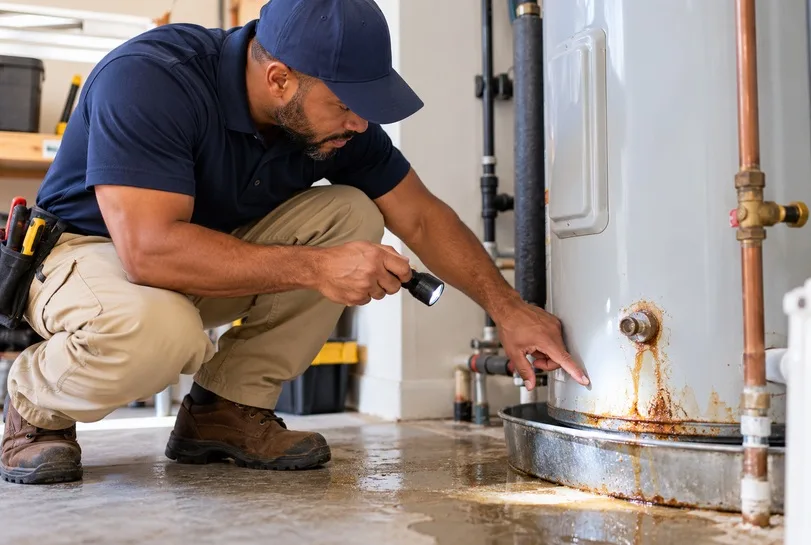
A puddle around your water heater is not a problem to watch for a few days. It is a problem to act on today, before that slow drip becomes a flooded utility room. Herrell Plumbing handles water heater replacements throughout Winter Park, and we know the difference between a fix that buys you time and one that wastes your money. Call us at (407) 273-6260 or reach out to our team and we will tell you honestly which situation you are in.
What are the signs your water heater needs replacing rather than repairing?
The clearest sign is water at the base of the tank. A small amount of condensation on a humid Florida morning is normal, but a pooling puddle that reappears after you dry it up points to a crack or corrosion in the tank itself. Unlike a failing valve or a worn heating element, a compromised tank cannot be repaired. Once the steel casing is leaking, the only fix is replacement.
Rust-colored water from your hot taps is another indicator that deserves attention. Hot water runs through the tank before it reaches your fixtures, and discoloration in the hot line specifically, rather than both hot and cold, usually means the interior of the tank is corroding. Sediment buildup shows up as popping or rumbling sounds during the heating cycle, which is the tank working harder than it should to heat water through a layer of mineral deposits. In Winter Park, where the municipal water supply carries enough dissolved minerals to accelerate scale buildup, tanks that are not flushed regularly reach this point faster than the national average suggests they should.
How do age and hard water shorten a water heater's useful life?
A standard tank water heater is rated for eight to twelve years under normal conditions. Hard water compresses that range from the bottom. Dissolved calcium and magnesium settle out of the water as it heats and form scale on the bottom of the tank and on the heating elements. That scale acts as insulation between the heat source and the water, forcing the unit to run longer cycles to reach temperature. Extended heating cycles stress the tank lining, the anode rod, and the connections, pushing a unit toward failure faster than age alone would.
The anode rod is the sacrificial component inside the tank that corrodes so the tank itself does not have to. In hard water conditions, it can deplete in three to five years instead of the six to ten you would see in softer water areas. Once it is gone, the tank begins to corrode from the inside. Most homeowners do not have it inspected on a regular schedule, which means by the time visible symptoms appear, the corrosion has been progressing for some time. If your tank is past ten years old and you are seeing any of the signs above, age alone is a strong argument for replacement.
What is the risk of a sudden full-tank failure?
A water heater tank holds forty to eighty gallons depending on the unit. When a corroded tank fails suddenly rather than slowly leaking, that volume of water releases into whatever space the heater occupies, whether a garage, a utility closet, or a basement. The structural and mold damage from that kind of water event can easily run into the thousands of dollars, well beyond the cost of a replacement that would have prevented it.
We got a call from a Winter Park family after their son noticed a puddle forming around the water heater base. Mom was concerned because guests were arriving that afternoon. When we arrived, the rust around the base and the age of the tank made the answer clear: a repair would only delay the real problem. We replaced the unit that day. They made the right call by calling us before the tank made the decision for them.
How does a plumber size the right replacement water heater for your home?
Replacing a water heater is not simply swapping one tank for another of the same size. The unit that was right when your home was built may be undersized for current demand, or oversized and costing you money in standby heating for hot water no one is drawing. A plumber sizing a replacement looks at peak demand: how many fixtures, how many occupants, and whether there are back-to-back high-demand uses like morning showers stacked close together.
Fuel source, efficiency rating, and the physical space available for the unit also factor in. Tankless water heaters have become a practical option for many Winter Park homes as a replacement for aging tank units, offering on-demand heating without the standby losses of a stored-water system. Whether a tankless or a tank unit makes sense for a given home depends on the gas line capacity, the existing venting, and what the homeowner actually needs. Our water heater service covers the assessment and installation so the replacement is sized and spec'd correctly from the start, not just grabbed off a shelf.
If your Winter Park water heater is showing any of these signs, do not wait for the tank to decide the timing. Call Herrell Plumbing at (407) 273-6260 or contact our team and we will assess what you have, tell you whether repair or replacement makes sense, and handle the work the same day when the situation calls for it.