Rusty Water and Low Pressure in an Older Dr. Phillips Home? Why Whole-House Repiping May Be the Fix
by Sheila Beasley · 5 min read
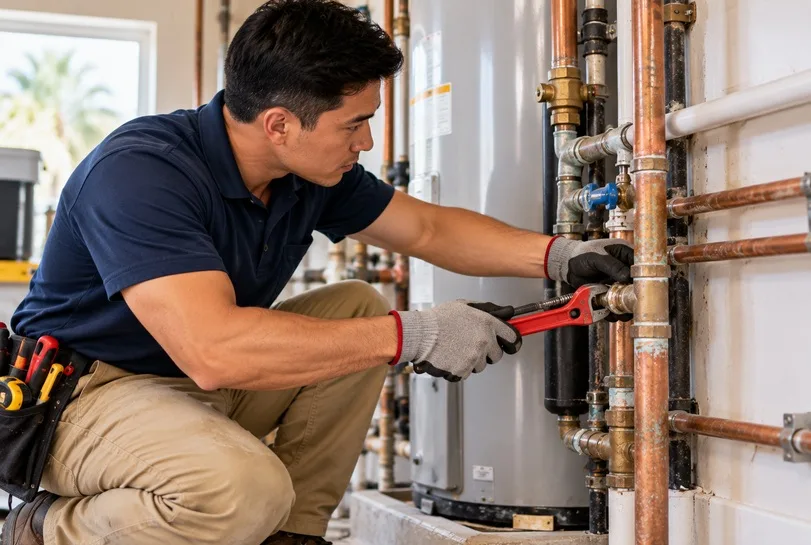
Discolored water and showers that trickle when they should flow are not minor annoyances. In an older Dr. Phillips home, they are usually the pipes telling you something important. Herrell Plumbing has repiped homes throughout the area and knows what aging pipe systems look like from the inside out. Call us at (407) 273-6260 or reach out to our team to schedule an inspection and find out what your water supply is working with.
Why do older galvanized pipes cause rust and low water pressure?
Galvanized steel pipes were the standard in homes built before the 1970s and into the early 1980s, and they have a predictable lifespan. The zinc coating that protects the steel from corrosion eventually wears away, and once it does, the pipe itself begins to rust from the inside out. That rust does two things: it flakes off into the water supply, which is where the orange or brown tint at your faucets comes from, and it builds up along the interior walls of the pipe, steadily reducing the diameter of the passage water can move through.
Low water pressure in an older home is frequently a diameter problem. A pipe that was once three-quarters of an inch wide on the inside may be effectively half that after decades of mineral deposit and rust accumulation, particularly in Central Florida where the water supply carries enough dissolved minerals to accelerate the process. Replacing a corroded section does not solve the problem because the rest of the line is in the same condition. The buildup that is causing the pressure drop at one fixture is happening everywhere in the system.
What are the health and staining risks of corroded supply lines?
Rust-colored water is visually alarming, but the more common concern with corroded galvanized lines is what the corrosion does to fixtures, appliances, and surfaces over time. Iron deposits stain sinks, tubs, and toilet bowls in a way that no cleaning product fully removes. Laundry run through a washing machine fed by corroded lines can come out with rust staining on light fabrics. Water heaters and dishwashers connected to degraded supply lines accumulate sediment that shortens their service life and reduces efficiency.
On the health side, while iron itself is not typically a health risk at the concentrations found in residential pipe corrosion, the texture of the interior pipe wall that causes rust flaking also creates surfaces where bacteria can accumulate. An older corroded line is harder to keep biologically clean than a smooth modern pipe. Most Dr. Phillips homeowners who call us after noticing rusty water are not running a health risk day to day, but they are running an appliance and fixture replacement cost that adds up quickly if the underlying pipe system is not addressed.
What does a whole-house repipe involve and how long does it take?
A whole-house repipe replaces the supply lines that carry water from your main shutoff throughout the home, typically with cross-linked polyethylene tubing, which is flexible, resistant to corrosion, and well-suited to Florida's water chemistry. The work involves accessing the lines through walls and ceilings at strategic points, running new tubing through the framing, and connecting it to every fixture, appliance, and hose bib in the house. It sounds disruptive, and there is some drywall work involved, but a well-organized crew can complete a repipe on a standard single-story Dr. Phillips home in one to two days.
Water is typically off for the working hours and restored each evening. Most homeowners stay in the house during a repipe without significant disruption to their routine. Once the new lines are in, the drywall openings are patched and the system is pressure-tested before we consider the job complete. The difference in water clarity and pressure is usually immediate and noticeable. Homeowners who have lived with weak flow for years sometimes call us the next morning to report that their showers feel like a different house.
When does repiping make more sense than continued patch repairs?
The math on patch repairs in an aging galvanized system works against you quickly. Fixing one corroded section relieves pressure at that point, but the rest of the line is in the same condition, and the next pinhole or joint failure is already forming somewhere else in the wall. We saw this with a Dr. Phillips homeowner whose visiting relatives commented on his low water pressure. He had gotten so used to it that he stopped noticing. When the inspection turned up rusty water throughout the house, not just at one fixture, the picture was clear: the problem was the whole system. Repiping once costs less than repairing repeatedly and still ending up with old pipes.
The long-term payoff from a full repipe is a system that will not need that kind of attention for decades, water that is clear at every fixture, and pressure that performs the way it should. It also removes a line item from every home inspection report for buyers if the home is ever sold, which carries real value in a neighborhood like Dr. Phillips where buyers look closely at what is behind the walls.
If your home's water has been running rusty or slow, call Herrell Plumbing at (407) 273-6260 or contact our team to schedule an inspection. Our house repiping service covers everything from diagnosis to finished patch so you know exactly what you are getting before the work begins.