Is Your Water Heater a Safety Risk? What to Check
by Hanna Carolina · 4 min read
How hot is too hot for your water heater?
For most homes, 120 degrees is the safe setting. Water heater safety really comes down to two things, and this is the first one. Water that is set too hot scalds fast. According to the Gas Appliance Manufacturers Association, it takes about half a second to scald at 150 degrees, one second at 140, and four minutes at 120.
That gap is enormous when a child or an older adult is the one at the tap. Worried yours is set too high? Call Herrell Plumbing at (407) 273-6260 or reach out to our team for an inspection.
Most modern units leave the factory at 120. The trouble is the older ones. We still find water heaters in Orlando homes cranked to 140 or 150 because someone turned it up years ago and forgot it was there. It costs more to run every single month, and it puts the people in the house at real risk.
Checking the setting takes us a couple of minutes with a thermometer at the nearest tap, since the dial on the tank is not always honest. Adjusting it down is a simple fix that lowers your bill and makes the whole house safer at the same time.
What is a T and P valve, and why does it matter?
The temperature and pressure relief valve, the T and P valve, is the one part standing between a working water heater and a serious failure. It opens to release pressure when the tank gets too hot or too full. When it sticks or corrodes shut, that pressure has nowhere to go. Plumbers have seen what happens when one lets go, and it is not something you want happening in your garage or closet.
Our technicians test the valve and the gauges every time we service a heater, because a stuck one gives no warning until the day it matters. We also check that the discharge tube running off the valve is routed correctly, since a valve that works but drains onto the floor is its own problem. Gas units get an extra look.
A gas water heater brings venting and a burner into the picture, so we inspect the gas line and connections along with the valve to make sure nothing is leaking or drawing wrong. It is a quiet part most homeowners never think about, and it is exactly the kind of thing worth having a pro confirm.
What does it mean when a water heater leaks from the bottom?
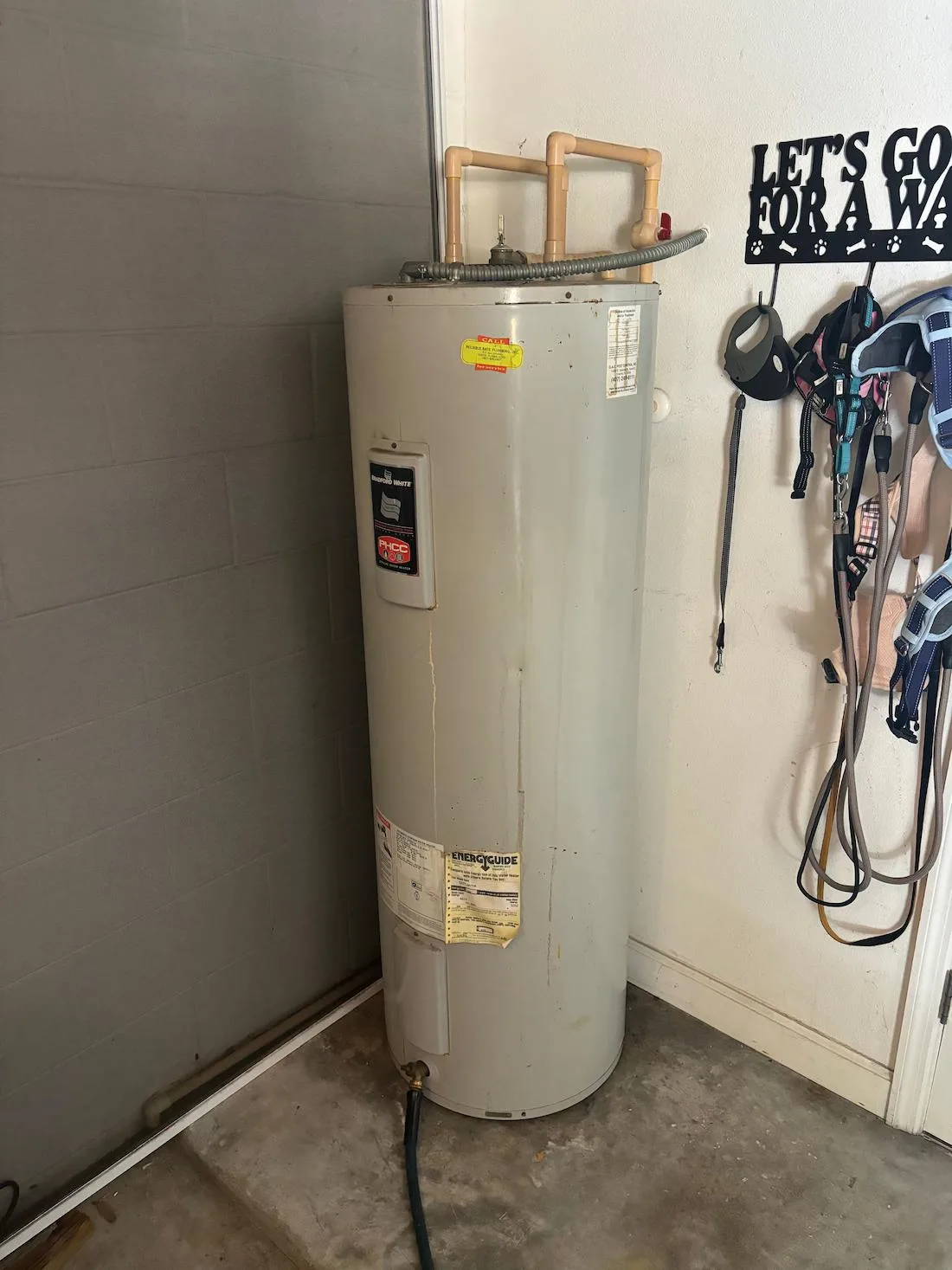
A leak at the base of the tank almost always means the tank has rusted through from the inside. That one cannot be repaired. The only real fix is to replace the unit. By the time water is pooling underneath it, the steel has already lost the fight, and no patch or sealant is going to bring it back for long.
It happens because our water is hard on tanks. Sediment settles at the bottom, the sacrificial anode rod wears out, and the steel starts to corrode from within. Most tanks give you eight to twelve years before that catches up with them. If yours is sitting in a drain pan and you catch a small drip early, you have time to plan a replacement instead of scrambling after a flood.
When it is time, we install and service Rheem tank heaters along with Rinnai and Noritz tankless units, and we help you pick the right water heater for your household rather than swapping in whatever happens to be on the truck. We keep common units in stock, so a failed heater usually does not mean days without hot water.
How often should you have a water heater inspected?
Once a year is the honest answer, and sooner if yours is already past the eight year mark. An annual check catches the small problems while they are still small. We flush the sediment out of the bottom, look at the anode rod, test the T and P valve, and check the connections and the venting on gas models. It rarely takes an hour.
None of that is glamorous, and that is the point. A water heater that gets a look every year rarely surprises you, while one that gets ignored tends to fail on the coldest morning or right before company arrives. We have been servicing heaters across Orange and Seminole Counties since 1970, and the same technician tends to cover the same area, so over time we get to know the homes and the units we are working on.
Call Herrell Plumbing at (407) 273-6260 or contact our office to schedule a water heater inspection before a small issue becomes a cold shower.