How to Catch a Hidden Water Leak Before It Costs You
by Hanna Carolina · 5 min read
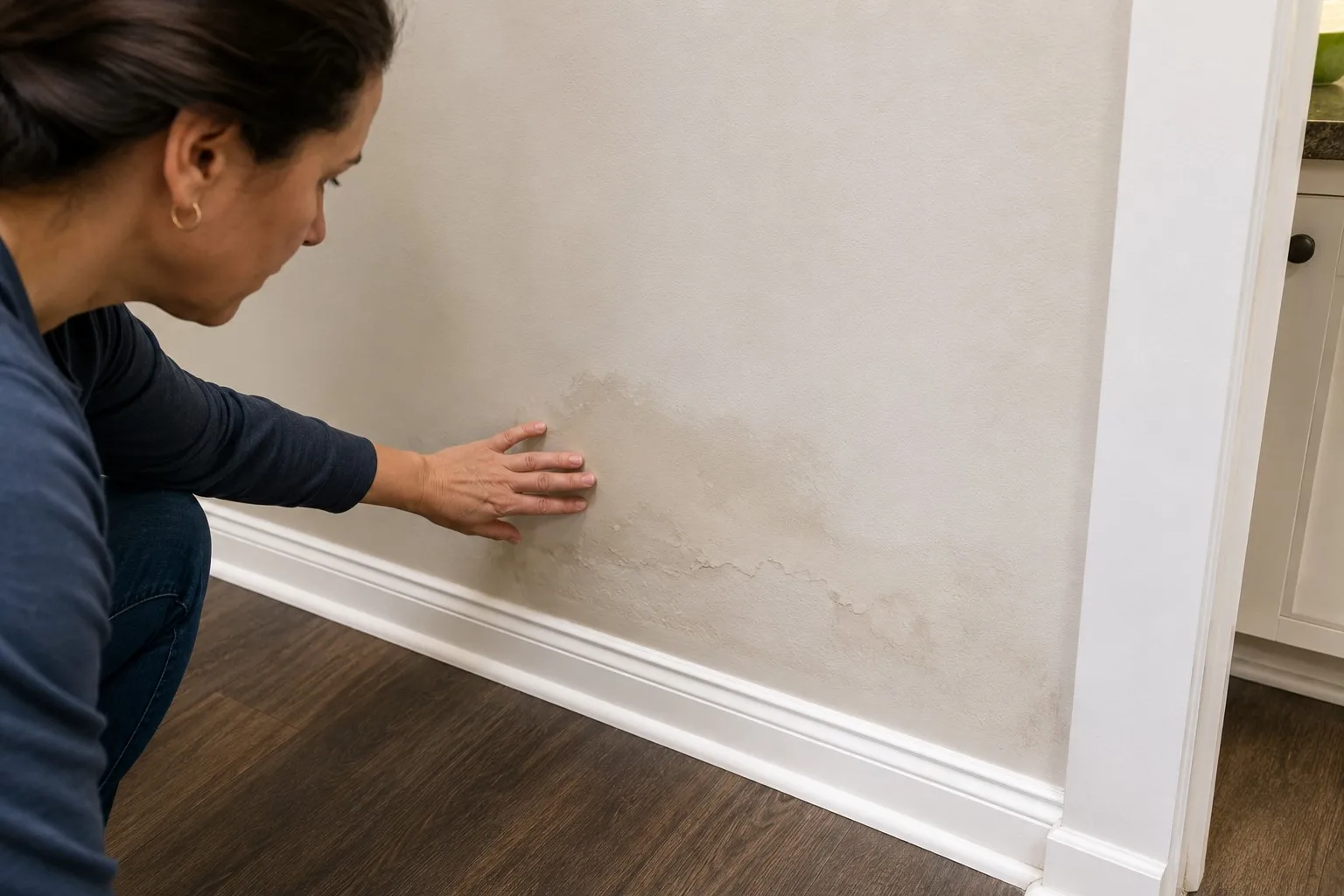
What are the early signs of a hidden water leak?
A hidden water leak almost never announces itself. It usually shows up as a musty smell in one room, a warm spot on the floor, or a water bill that crept up for no reason you can name. Sometimes you hear water moving inside a wall when every faucet in the house is off. Those are the clues worth trusting. If any of them sound familiar, call Herrell Plumbing at (407) 273-6260 or reach out to our team and we will track the source down.
There is a simple test you can run yourself. Find your water meter, make sure everything in the house is off, and watch the small dial. If it keeps creeping, water is escaping somewhere between the meter and your fixtures. Take a slow walk around the house every so often too, and look at the exposed pipes under sinks, at the water heater, and where lines run through the garage.
Rust or a chalky white lime crust on a joint is often the first sign the metal is starting to give. In a lot of the older Orlando homes we work in, the original galvanized and cast iron lines have been carrying hard, chlorinated water for fifty years, and they corrode from the inside where you cannot see it. Spot the stain early and you are looking at a small repair instead of a soaked wall.
Why does a small leak turn into an expensive one?
Water is patient, and it hides. A pinhole leak behind a wall can run for weeks before a stain finally bleeds through the paint, and by then it has been feeding the drywall, the baseboard, and the wood framing behind them the whole time. The longer it runs, the more it takes with it. What starts as a damp patch becomes warped flooring, swollen cabinets, and trim that pulls away from the wall.
Central Florida humidity makes all of it worse. Damp framing and cabinet backs are exactly what mold needs, and once it takes hold behind a vanity or under a floor it becomes a far bigger job than the plumbing that started it. Many homeowners insurance policies also draw a hard line between a sudden burst, which is usually covered, and a slow leak that went unaddressed, which often is not.
That is why we push people to act on the first sign. A quick inspection now can save you thousands later, along with the flooring and drywall you would otherwise be tearing out.
Are store bought drain cleaners safe to pour down a slow drain?
Most of the drain cleaners on the supermarket shelf are harshly corrosive, and we do not recommend them. They can burn skin and eyes, and they sit in the trap waiting for whoever opens that pipe next, which is often a plumber or you. On older pipes they can do real damage to the very line you were trying to save, eating at the metal and the seals along the way.
There are gentler, non corrosive products that are far safer for your pipes and your family, and we are happy to point you to the ones that suit your system. Here is the part the label will not tell you. A drain that keeps backing up is rarely fixed by a bottle. The bottle is a bandage. It usually points to something deeper, like grease buildup, tree roots, or cast iron that has scaled shut over decades.
When that is the case, professional drain cleaning clears the real cause instead of buying you a week before it clogs again.
When should you call a plumber instead of watching a leak?
Call when you cannot see the source, when the water is anywhere near electrical, or when the same spot keeps coming back after you thought you fixed it. Old pipe is another reason to pick up the phone. If your home still has its original galvanized or cast iron supply lines, a single leak is often a sign the rest of that plumbing is not far behind.
This is where we come in. We run a camera and a pressure test to find exactly where the water is escaping, so you only open up what actually needs opening instead of guessing and cutting. When the pipe itself is the problem, we handle full house repiping with FlowGuard Gold CPVC, the same material we have trusted here since 1990.
We have been finding and fixing leaks across Orange and Seminole Counties since 1970, and our trucks carry the parts for most repairs, so there is no waiting on a supply run in the middle of your job.
You do not have to guess where the water is going. Call Herrell Plumbing at (407) 273-6260 or contact our office and we will find the leak and fix it right the first time.